Sierra Leone Is Not a Narco State
A month ago, I left Freetown sitting on the top deck of the Sea Bird Express. There is no covering up there. Just metal benches, a rail, the wind and a sky full of clouds.
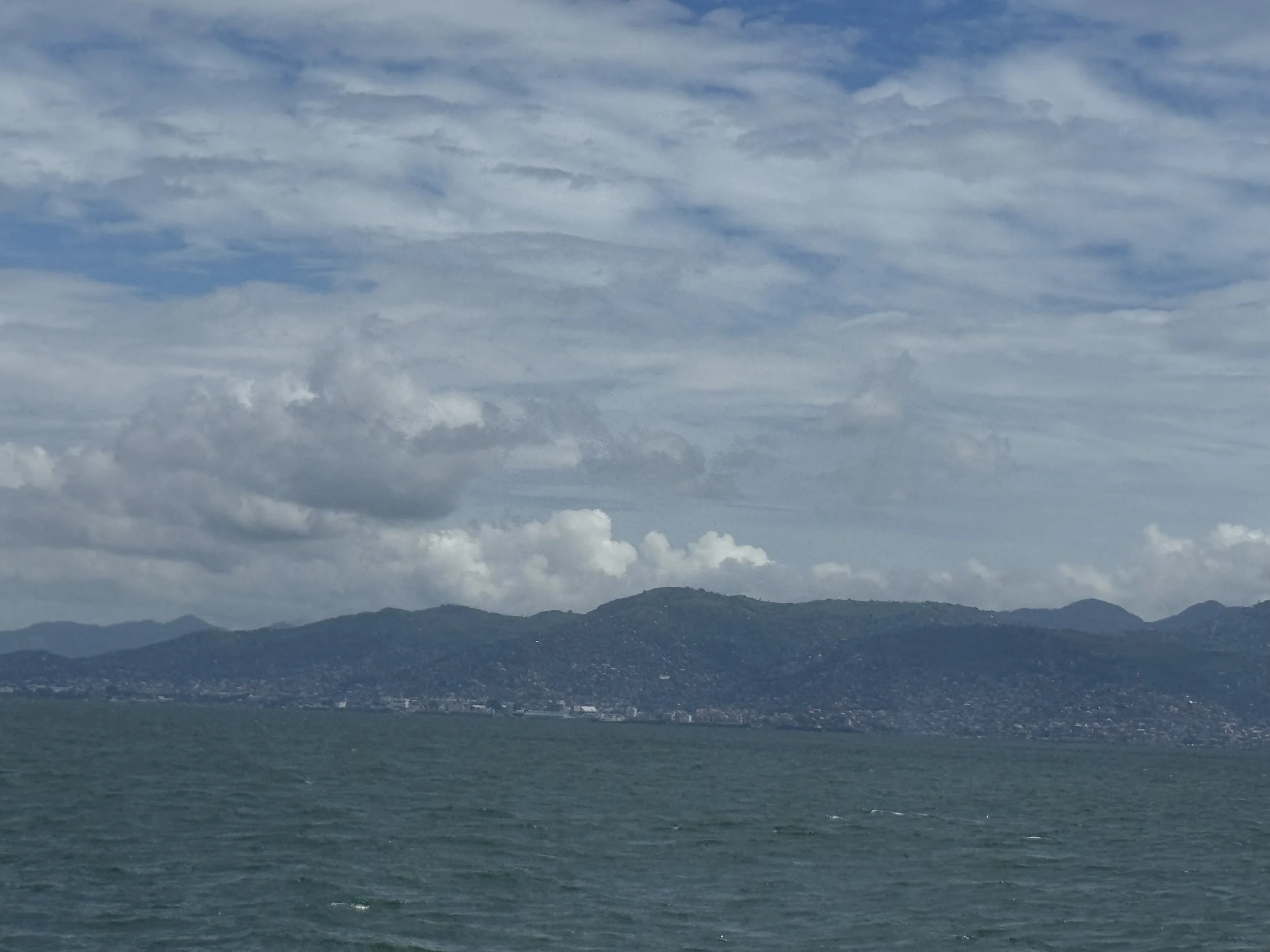
Freetown in September 2026
As the boat pulls away, the engines churn the water white and the city opens up behind you. Houses climb the green hills, one roof on top of another, all the way to the radio masts at the top. Down at the waterline, the cranes and warehouses of the port. The same port that is now at the centre of The Guardian's story.
It could have been a yacht. It wasn't. It was just another water taxi crossing from Freetown to Lungi.
I've made that trip four times this year. I don't live in Sierra Leone anymore, but this is my birthplace. This is where I do business. My parents live here. My workers live here. I am building a dream here.
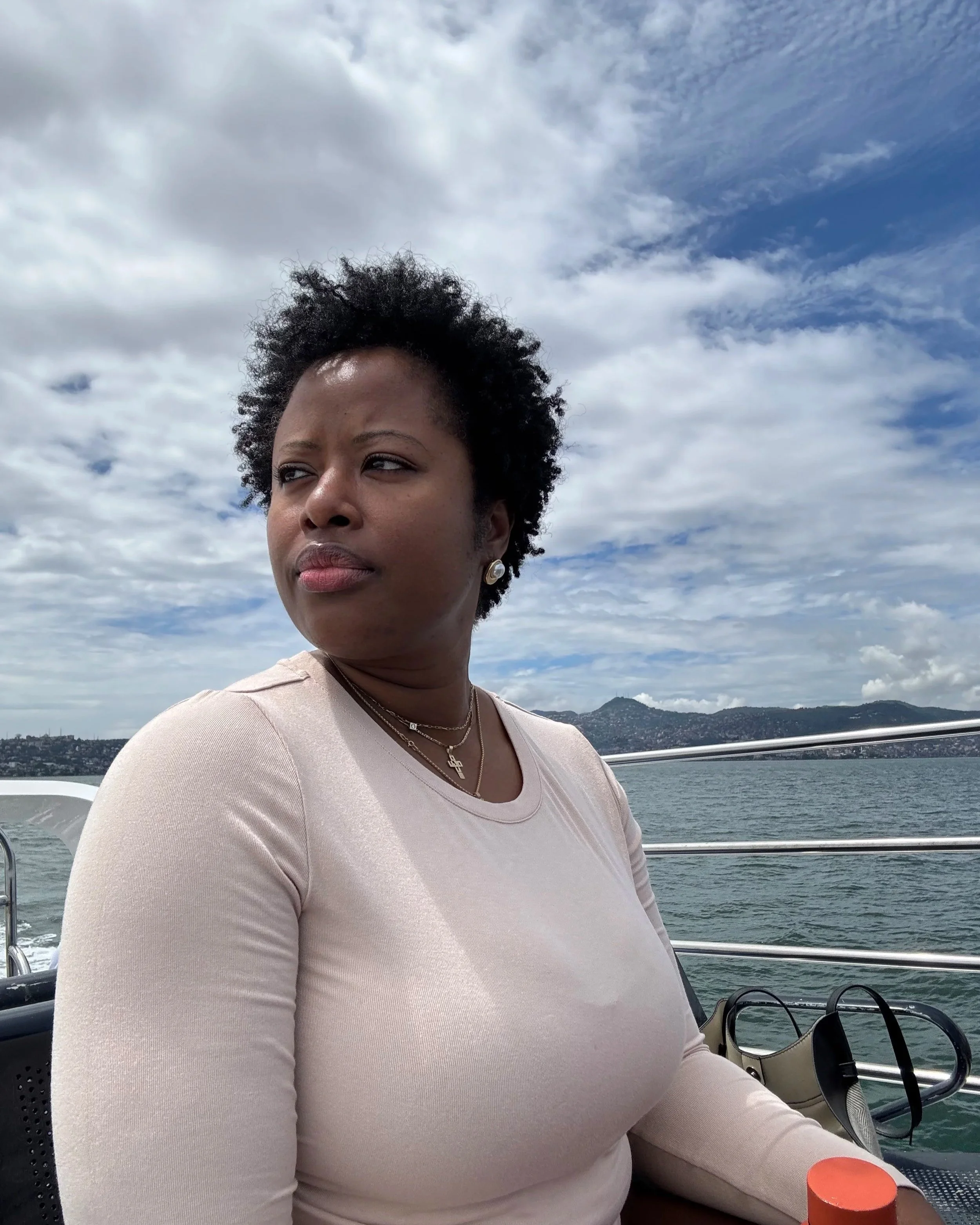
So seeing The Guardian's latest article brand Sierra Leone a narco state felt like a punch in the stomach.
Your nation's brand follows you
I was 12 years old when I had to leave Sierra Leone by road during the civil war. I was a child refugee. Like so many of my generation, we ended up wherever we could: Guinea, The Gambia, the UK. I ended up in the US.
Here is what I learned very early. At home, you don't feel it as much. But out in the world, your nation's brand follows you.
It follows you at airports. It follows you when you apply for visas. It follows you when you apply for scholarships and when you apply for jobs. It follows you at dinners, at social gatherings, in the back of an Uber when the driver asks, "So where are you from?"
Your nation's brand follows you. And the work I do today, I do because of that.
Say a country's name. What comes to mind?
I don't know how the experts define a nation's brand. But I know that when you say the name of certain countries, words, ideas and pictures come to mind. Sometimes it's one person. Sometimes it's an industry.
Say Barbados, and I think of Rihanna.
Say India, and I think of Tata, Bollywood and Amitabh Bachchan.
Say Nigeria, and I think green-white-green. I think of Lagos, Chimamanda, Afrobeats, fashion and Ogas at the top.
Say Ghana, and I think of kente, Volta Region, Nkrumah and banku.
Say Rwanda, and I think of Wakanda. Kagame, clean streets, rolling hills and coffee.
Say South Africa, and I think of Mandela, Joburg and a multicultural nation.
Now say Sierra Leone. Out in the world, I have often been met with a blank stare. An empty space. If the person is "worldly", they might think of Ebola. Diamonds. The civil war.
But over the last 10 years, something has been shifting. I still get the blank stares. But now, in the US, in Ghana, in global rooms, people also say: "Oh, I've heard of your mayor in Freetown, Yvonne Aki-Sawyerr." Or they've heard of Ishmael Beah, or our Chief Minister and former Chief Innovation Officer, David Moinina Sengeh. Or Idris Elba is going there. Or, "I've heard about your beaches."
The conversation has been changing. That change didn't happen by accident.
The job starts at home
In 2019, I went to Kigali for Rwanda's 25th liberation anniversary and wrote about the secret behind Rwanda's success. The answer I came home with was dignity. Agaciro. A nation that decided, from the inside, who it was going to be. I wrote then that dignity is a birthright. I still believe that.
I have spent the last two decades trying to be part of shaping how the world sees Sierra Leone. But what makes my work different is that I decided the job was internal first. Before I worry about how the world sees us, I want to know how Sierra Leoneans see Sierra Leone after the damage and dehumanization of the war. When we say "I am Sierra Leonean," what do we feel? What pictures come to mind?
That journey started on The Vickie Remoe Show, on SLBS TV, holding up a mirror so Sierra Leoneans could see their own reflection. Sierra Leoneans rising and achieving. Sierra Leone beyond the beaches: in the rainforest, in the market, on a worreh (dairy farm) in Koinadugu District.
That work continues on the Make Sierra Leone Famous podcast and on my social media. And for 20 years, SwitSalone.com has been a digital archive of Sierra Leoneans at home and in the diaspora: who we are, what we achieve and what we are capable of.
One headline, one narrative
This month, The Guardian published an investigation that labels Sierra Leone "the world's first true narco state." With one headline, it tries to rewrite our most recent history into a single story.
It was easy for me to reject that label. I know it is untrue because I do this work. I know because my family lives there and my staff work there. When it comes to what shapes the daily lives of most Sierra Leoneans, nobody knows it better than us.
The elephant in the room
Let me be clear. There is an elephant in the room, and I am not going to pretend otherwise.
The Guardian and other outlets have reported that Jos Leijdekkers, one of Europe's most wanted cocaine traffickers, is living in Sierra Leone and has family ties to the President through one of his daughters. I have seen footage of him in Sierra Leone online. I have heard enough from people in the know to believe he is there.
We have also seen reports, and heard local stories of boats arriving at night. We have seen more and more shipments that left Sierra Leone get intercepted abroad with drugs on board. Sierra Leone is being used as a transshipment point.
Is that criminal activity? Absolutely. Should it be investigated, challenged and stopped? Absolutely.
Does one man, or one small network, make Sierra Leone a narco state? Absolutely not.
If we were a narco state, we would know
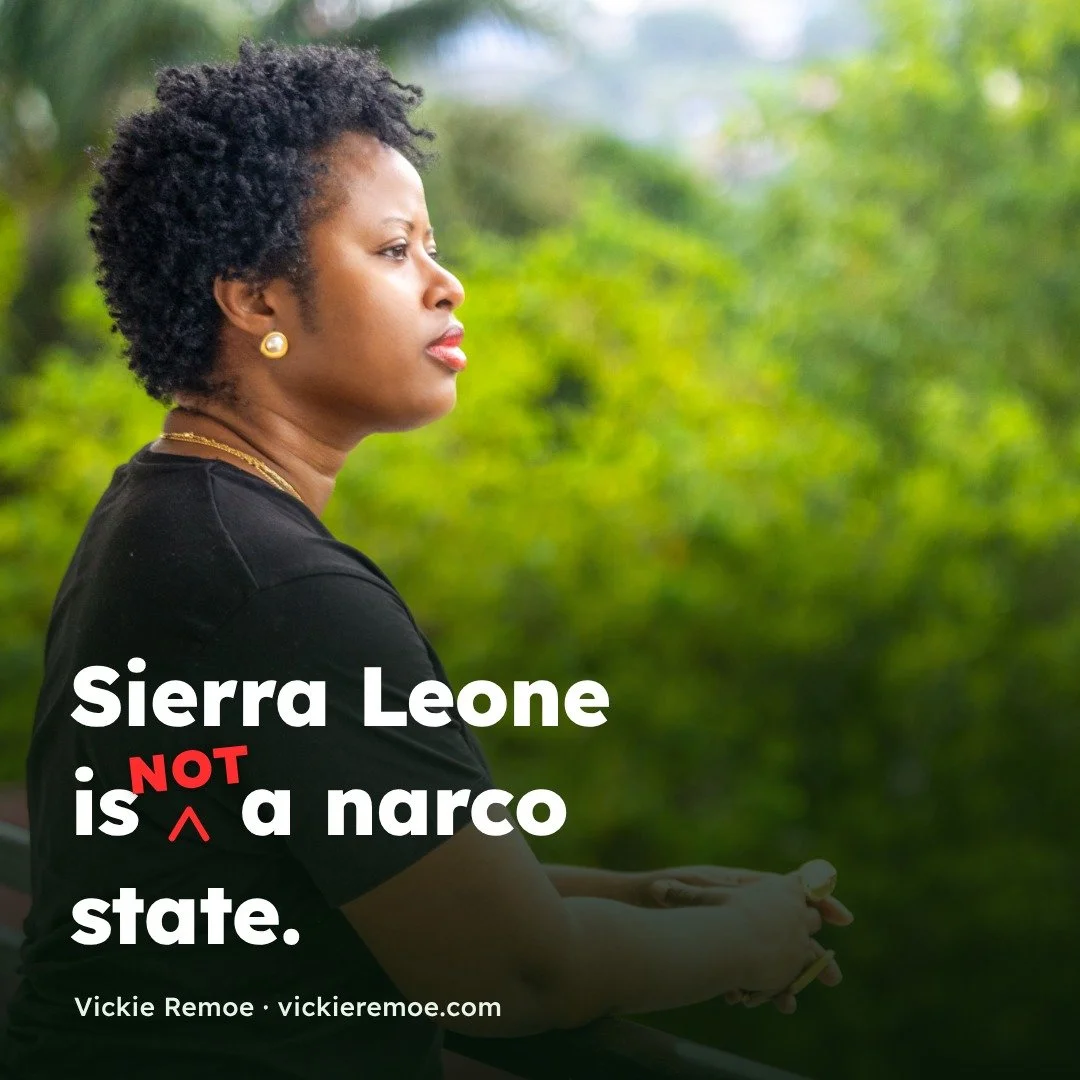
If Sierra Leone were what that headline says it is, a British newspaper would not need to tell us. We would be living it.
In places where drug cartels truly run the state, ordinary people disappear. Not in ones and twos, but in the hundreds and the thousands. Everyday citizens with no connection to the trade or to government vanish. Bodies turn up in random places. Journalists, content creators, police officers and politicians are targeted. Nobody is safe.
Sierra Leoneans, when was the last time you were afraid to go out day or night fearing for your life?
A narco state? That is not the Sierra Leone my family wakes up in. It is not the Sierra Leone my team works in. It is not the Sierra Leone I travel through.
You can, and should, interrogate how the state has responded to Sierra Leone becoming a playground for a wanted trafficker. Question it. Challenge it. Research it. Write about it. Call for action. All of that should be happening.
What should not be happening is letting that story become the whole story of a country of more than eight million people.
Let's look at the numbers
I am a journalist, so let's not argue with feelings. Let's look at the record.
Crime is rising, and we should say so. The Sierra Leone Police's own 2025 crime report recorded 34,066 offences, up from 29,015 in 2024. Homicides rose from 150 to 168. Violent crime grew from 34% to 44% of all offences. Domestic violence jumped from 7,456 cases to 12,301. Those numbers should worry every one of us.
But look at the scale. 168 homicides in a country of more than eight million people is roughly 2 per 100,000. The UN Office on Drugs and Crime puts the global average at 6.1 per 100,000, and Africa's at 13. Drug offences recorded by police in 2025? 448 cases, mostly kush, tramadol and cannabis. Cocaine cases were low.
That is not what a narco state looks like. That is a country with a growing crime problem, a kush crisis and a trafficking network that needs to be dismantled. Those are different things.
And the world's peace rankings agree. Years ago, the BBC interviewed me about Sierra Leone's place among the most peaceful countries in the world. Today we remain one of the most peaceful countries in Africa. In the 2026 Global Peace Index, Sierra Leone ranks 74th of 163 countries and 8th in Africa. The United States, for comparison, ranks 134th.
What does the UK government say?
The Guardian is a British newspaper. So I went and checked what the British government itself says about Sierra Leone.
The UK Foreign Office's travel advice for British citizens says crime rates in Sierra Leone are "comparatively low," while warning that violent and organised crime is rising. It warns visitors not to get involved with drugs. Nowhere does it call Sierra Leone a narco state.
And the UK is still putting its money here. British International Investment, the UK government's own development finance institution, has backed a $25 million lending facility with Ecobank Sierra Leone for local businesses and a 50MW solar project.
Governments don't put taxpayers' money into narco states. Their actions speak louder than any headline.
A bad brand has a price tag
This is not just about pride. A nation's brand has a dollar value.
Research from Africa No Filter estimates that biased media coverage could be costing African countries up to $4.2 billion a year in inflated interest payments. Their study compared how African countries are covered against non-African countries with similar political risks. African countries got more negative coverage, were linked more often to violence in headlines, and were seen by investors as riskier than they are. That perceived risk shows up as higher borrowing costs.
The researchers themselves say the $4.2 billion is a sense of scale, not an exact figure. But the point stands. When the world's press decides who we are, we pay for it: in the interest our governments pay, in the investment that doesn't come, in the tourists who don't book.
And it's not only governments that pay. It's the student whose visa gets a second look, the founder whose pitch gets marked as high risk, the traveller who gets pulled aside at the airport. Remember: your nation's brand follows you.
No sell your birthright for koko ebe
The Netherlands wants Leijdekkers handed over, and maybe rightly so. That is a fight for diplomatic channels. What we cannot do is accept that, because they haven't gotten what they want, they get to write Sierra Leone off and brand us a narco state. That gives away far too much power. After everything so many of us have done, collectively, to show the world Sierra Leone's dynamism, we cannot hand over our story that easily.
What worries me more is how quickly some of our own people have embraced the label. Some have political ambitions. Some are chasing a trend. Many are in the diaspora. Plenty of them don't like this government, and they have every right not to. But disliking a government is one thing. Giving away your nation's brand is another.
In Krio we say: no sell your birthright for koko ebe. To trade something priceless for a bowl of porridge. That is what it looks like to me when Sierra Leoneans cheer this label on. Because once you accept a brand someone else gives you, two things happen. You hand them the power. And it becomes your identity.
So my question to those amplifying it is simple.
Are you comfortable being from a country the world calls a narco state?
This government will leave office one day. Will you still be happy with that brand then?
If the leaders you want are elected, how much work will it take them to shed it? Will they even be able to?
We are still trying to shed the "war-torn" label more than two decades after the war ended. How long will it take to shed this one if we choose to wear it?
Why I won't accept it
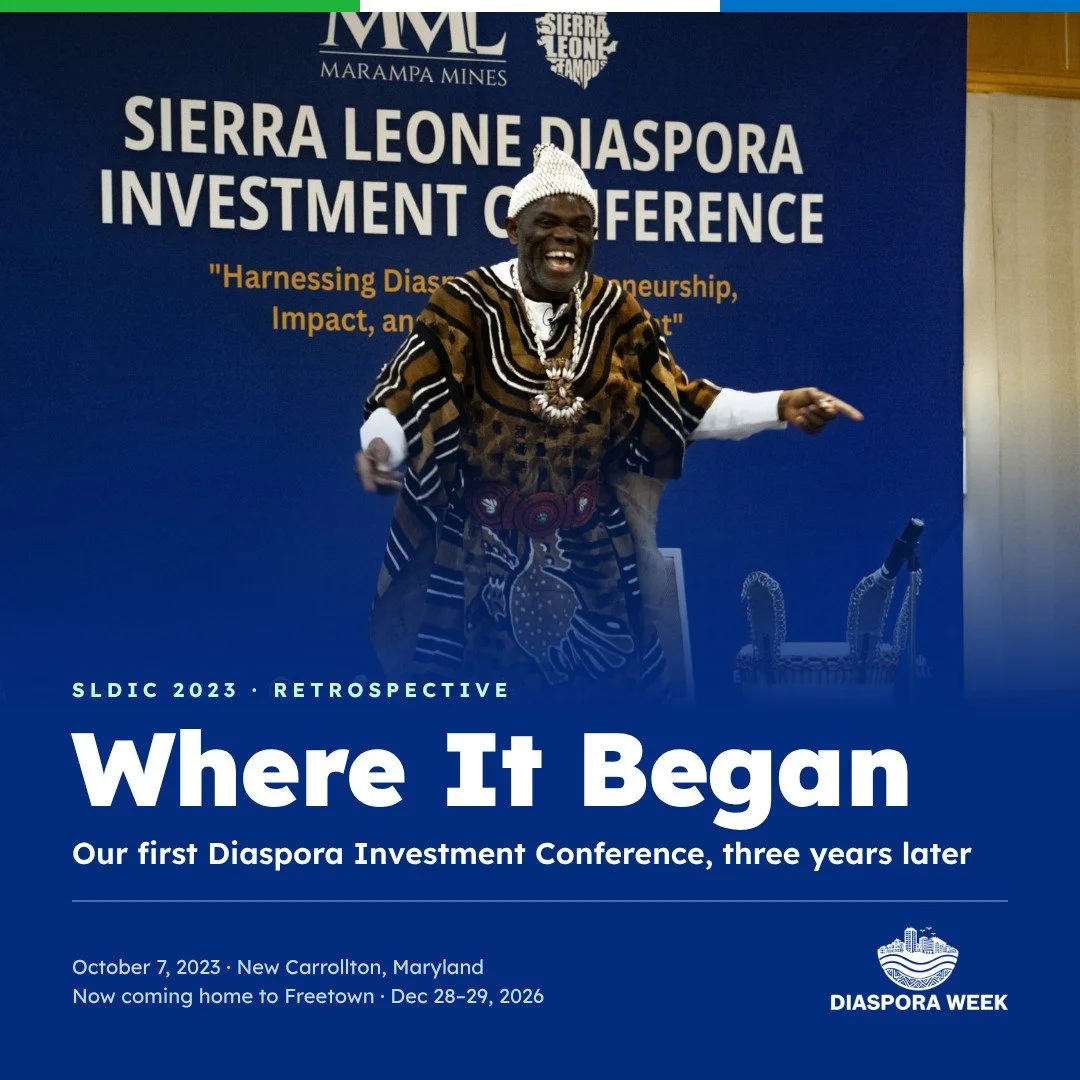
For the last three years, I have been convening the Sierra Leone Diaspora Investment Conference. The goal is to move diaspora capital beyond remittances, so that we become Sierra Leone's entrepreneurs, its investors, and the people who bring capital home.
That only works if people believe Sierra Leone is a place where they can build, where their businesses are safe and where they can profit. A narco-state label works directly against that.
So to anyone who questions why I reject this characterization: I will not accept a story that undermines what I know Sierra Leone needs. And I will not stand by while a single investigation and a single headline brand an entire nation to settle a dispute over one fugitive. We will not be blackmailed into a new identity.
Investigate the trafficking. Hold the state accountable. Demand answers. But keep our name.
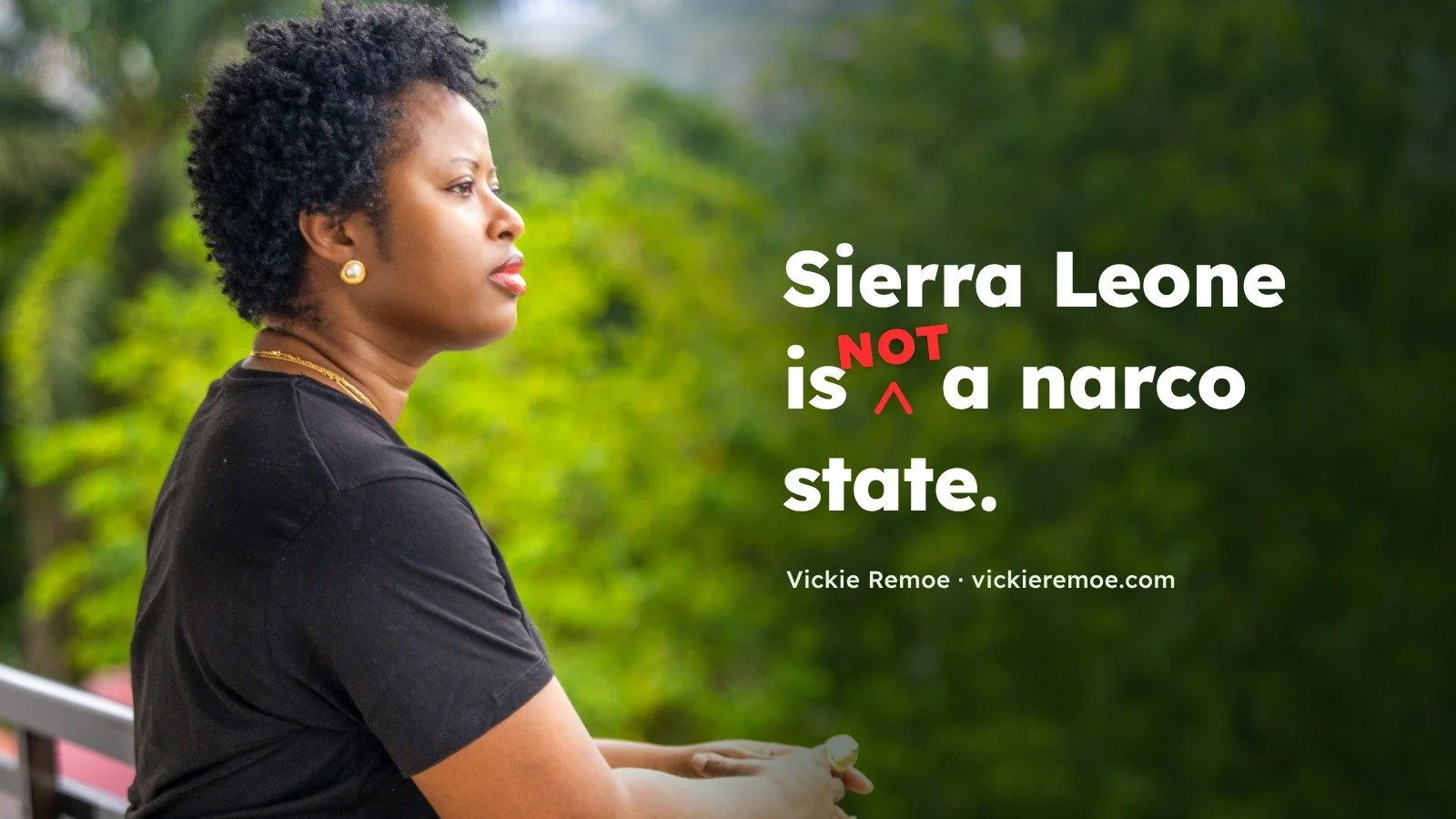
Sierra Leone is not a narco state. Salone na wi birthright. It is ours to defend.