Why Sierra Leone And African Countries Must Reciprocate US Travel Bans (Ban-Mi-A-Ban-Yu)
President Trump Expands Travel Ban to 39 Countries Including Sierra Leone
As of yesterday, Sierra Leonean citizens with immigrant and non-immigrant visas have been fully banned from entering the US. These sweeping changes are set to go into effect on January 1, 2026. Sierra Leone is one of 39 countries affected by Trump’s latest travel ban.
Previously, travel restrictions were limited to specific classes of visas (student, visitor, etc.), and citizens with existing visas could still travel. Critically, restrictions did not previously include non-immigrant categories like the O or H visas. Now, regardless of the type or validity of your US visa, you will be denied entry, either before boarding the plane or at a US port of entry.
The exceptions are few: government officials, diplomats, Olympic athletes, dual nationals, and green card holders. If you are a permanent resident, you are free to travel out of the US and will not be denied re-entry.
How Did Sierra Leone Get on the US Travel Ban List?
The US government cites several reasons: Sierra Leone’s high visa overstay rate, our failure to accept deportees in the past, and major issues with passport verification and authentication. All of these are valid concerns.
Sierra Leoneans do overstay. A year ago, our visa overstay rate was 15.53%—468 people out of 3,034 on a B1/B2 visa overstayed. Even worse, those on F (student), M (vocational), and J (cultural exchange) visas were twice as likely to overstay, with a rate of 35%.
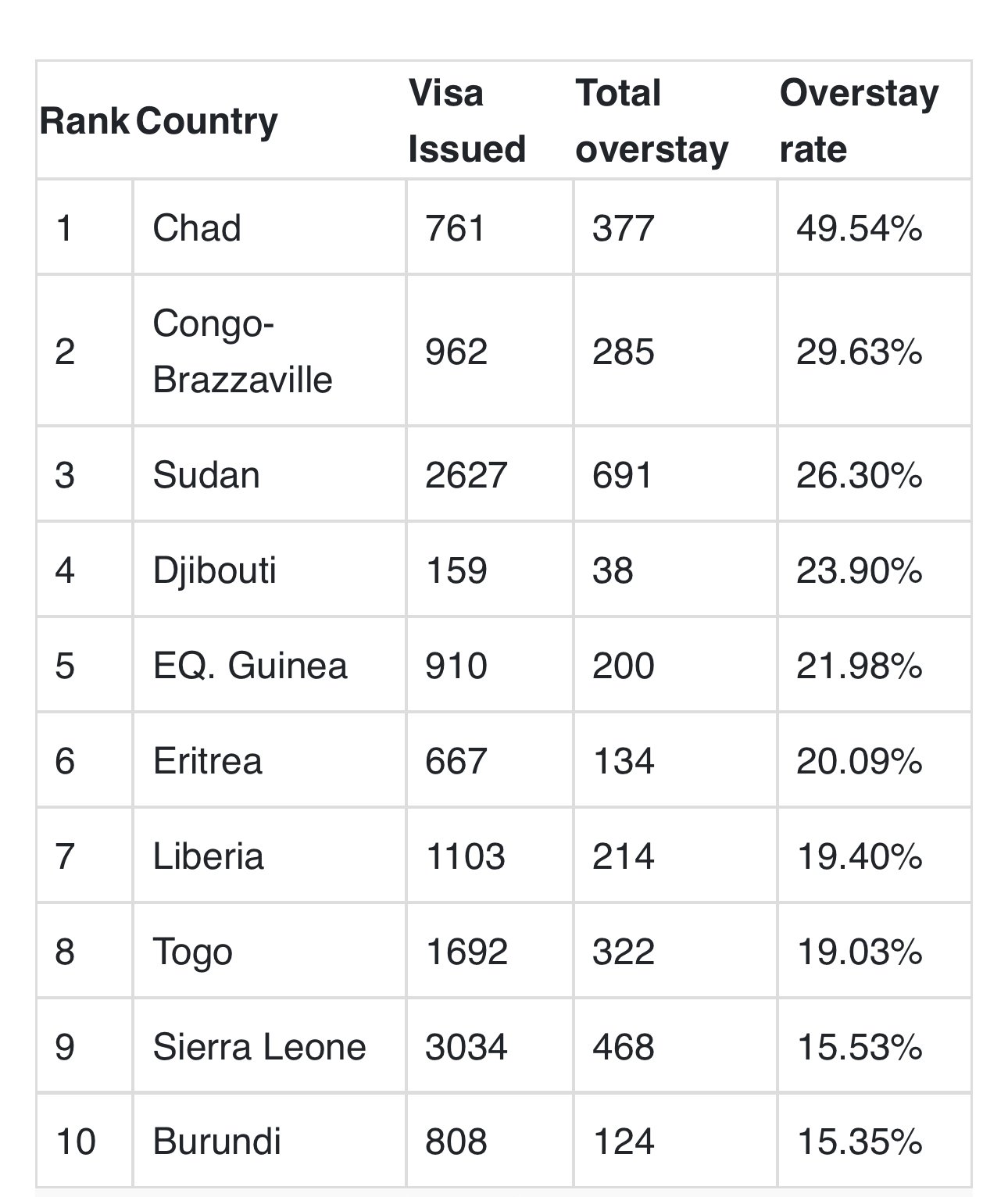
I cant remember the original source of this chart but it was in circulation a year ago before Trump was sworn in.
Many M and J visas are facilitated by the government. Off the record, I’ve been told the government abuses these visas. For example, a delegation list of 35 people for a trip to the UN General Assembly will inevitably include family, friends, and individuals who have paid for a slot. Upon arrival in the US, these people simply vanish, never returning to Sierra Leone.
Then there is the elephant in the room: the drug lord who entered Sierra Leone, possibly as a Turk or Dutchman, and continues to live in the country under a new name “Omar Sheriff” and a likely now has Sierra Leonean nationality. One of his associates, a Turkish national, was arrested with a diplomatic Sierra Leonean passport in October. For years, the Sierra Leonean passport has been sold to foreign nationals. If you sell your passport, it becomes nearly impossible to verify your own citizens when—and if—they are deported from the US.
Despite all this context, we could still have used diplomatic channels, like our Liberian brothers, to get off this list.
Which brings me to question the leadership at the Foreign Ministry. Having the right leader isn’t about academic qualifications; it’s about understanding Washington and the workings of Capitol Hill. I hesitate to criticize unduly, but there was a time when career diplomats led the ministry and represented Sierra Leone globally. I wonder how Ambassadors Ibrahim M’baba Kamara or Umarie Wurie or Soulay Daramy would have maneuvered.
On the one hand leaders celebrate their achievements on MCC scorecards and DFC investments but if we are on such good terms with the Americans how did we go from “limited” to full ban?
How is it that, at a time when Washington is willing to invest over $400 million in Sierra Leone, our government can’t impact immigration policy? If we can truly boast of favor in D.C., how come that favor doesn’t extend to something this basic, yet critical?
Where Do We Go From Here: Ban for Ban is the only way
I remain optimistic that this will evolve, and these unsustainable travel limitations and restrictions will eventually fall away. The US government has a right to protect its borders from nationals they deem unfit. African nations have the same right.
The only decisive next move for the affected African countries is to reciprocate the ban. If Sierra Leonean citizens can’t enter the US, then US citizens must not enter Sierra Leone. If Nigerians can only get 30-day visas to the US, then the same should apply to Americans entering Nigeria. Every nation on this list must reciprocate.
In Sierra Leone’s case, one of the largest mines in the country is American-owned. If Sierra Leone were to reciprocate the ban, that American investor and their staff would no longer be able to enter the country.
Said American investor, with millions on the ground, would be forced to turn to their Congress representatives and let Washington know these bans are bad for business. Only Americans with vested interests on the continent can lobby for change.
But will African leaders have the cojones to take such a bold move?
Don’t hold your breath!